Theory and practical competency assessment
Verification of Competency (VOC)
- STES, BHP, Rio Tinto, Woodside
- 4 standards
- VOCs performed each year
- 7,000+
- Onsite across WA
- Short notice
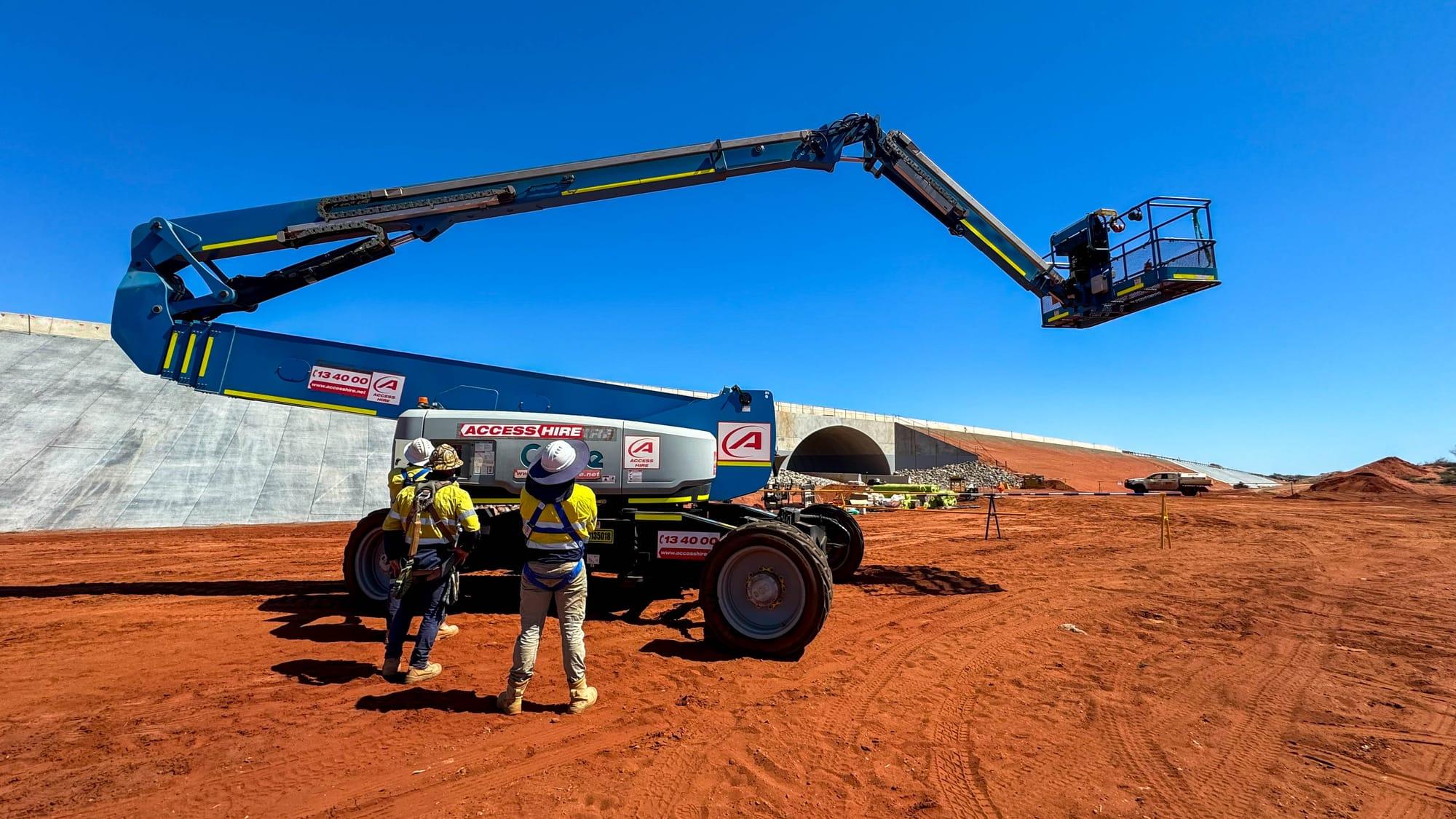
Assessment standards we work to
Different sites and employers use different competency frameworks. We're experienced in assessing against the major WA resource company standards.

BHP WA Iron Ore (WAIO)
Pilbara mine sites, port and rail
Assessments meeting BHP WA Iron Ore competency frameworks for Pilbara mine sites, rail and port operations.

Rio Tinto Iron Ore (RTIO)
Pilbara mine sites, rail and port
Assessments meeting Rio Tinto Iron Ore competency frameworks for Pilbara mine sites, rail and port operations.

Woodside Energy
Offshore and onshore LNG
Assessments aligned to Woodside Energy standards for offshore and onshore LNG and energy asset operations.

STES Standard
Not tied to one site standard
Our own RTO-backed assessment for clients who need a consistent VOC not tied to a single site standard.
All VOC types we assess in Perth & WA
Every Verification of Competency we offer, across the STES, BHP, Rio Tinto and Woodside standards.

How our VOC assessments work
From booking to receiving your competency record, here's what to expect when working with STES on a VOC assessment in Western Australia.
01
Enquire & book
Contact us with your equipment type, site standard, and number of workers. We'll confirm availability and pricing, short-notice bookings are available.
02
Pre-assessment check
Workers provide evidence of any existing licence or prior training. Our assessor reviews documentation before the assessment day.
03
Theory & practical assessment
Each worker first completes a short theory examination to test their knowledge of the equipment and safe operating procedures. They then perform a practical assessment while our assessor observes them against a structured competency checklist, at your site or ours.
04
Result & record
Competent workers receive a signed VOC record on the day. Results are stored in our RTO management system for audit purposes.
Understanding a Verification of Competency (VOC)
A Verification of Competency (VOC) is an assessment used to verify that a worker has the current skills and knowledge required to safely and competently perform a particular task or operate specific plant and equipment.
Under Australian Work Health and Safety (WHS) legislation, employers have a duty to provide workers with the information, training, instruction and supervision necessary to protect them from workplace risks. This includes ensuring workers are appropriately trained and competent to perform their assigned tasks.
While nationally recognised training and High Risk Work Licences establish formal competency and licensing requirements, they do not necessarily demonstrate a worker's current ability to perform a particular task or operate specific equipment.
This is where a VOC can provide additional assurance.
When is a VOC required?
A VOC is not a universal legislative requirement. However, many employers, principal contractors and mine sites use VOC assessments as part of their workplace safety and competency management systems.
A VOC may be requested when:
- A worker commences employment or mobilises to a new worksite.
- An employer needs to verify a worker's existing skills and knowledge.
- A worker is required to operate unfamiliar or different plant and equipment.
- A client or principal contractor has specific competency verification requirements.
- An employer's internal procedures require periodic competency assessments.
Importantly, a VOC does not replace nationally recognised training or a High Risk Work Licence where these are required.
VOC or refresher training: which do you need?
The appropriate pathway depends on the worker's existing qualifications, experience, current competency and the requirements of their employer or worksite.
Verification of Competency (VOC)
For workers who already possess the required qualifications or licences and have maintained their skills through relevant work experience, a VOC provides an opportunity to demonstrate their current competency without unnecessarily repeating their original training.
Refresher training
For workers who have not performed a particular task for an extended period, have identified knowledge or skill gaps, or require training on new equipment or procedures, refresher training may be more appropriate.
Where a worker does not hold the necessary qualification or licence, initial nationally recognised training and any applicable licensing requirements must be completed.
There is no universal legislative requirement for nationally recognised units of competency to be renewed every two years. However, individual employers and worksites may impose their own requirements for refresher training or periodic competency verification.
Why choose STES for your VOC?
Not all VOC assessments are conducted to the same standard.
Unlike nationally recognised training and assessment, a standalone VOC is generally a non-accredited service and does not result in a nationally recognised Statement of Attainment.
At Skills Training & Engineering Services (STES), our VOC assessments are developed with reference to relevant national units of competency, applicable industry requirements and the specific tasks or equipment being assessed.
Where appropriate, assessments can be contextualised to reflect workplace conditions and client requirements.
Our experienced assessors conduct VOC assessments across a wide range of high-risk work activities and plant and equipment, helping employers verify the competency of their workforce while minimising unnecessary time away from productive work.
HRWL vs. VOC: what's the difference?
A High Risk Work Licence (HRWL) and a Verification of Competency (VOC) serve different purposes. While an HRWL is a legal requirement for certain activities, a VOC helps employers verify that workers have the skills and knowledge to perform their work competently.
High Risk Work Licence (HRWL)
- Issued by WorkSafe WA or another Australian WHS regulator
- Recognised throughout Australia
- Legally required for prescribed classes of high-risk work
- Valid for 5 years, with renewal required
- Obtained following accredited training, assessment and regulator approval
Verification of Competency (VOC)
- Conducted by a training provider or suitably competent workplace assessor
- Verifies a worker's current skills and knowledge
- May be required by employers, mine sites or principal contractors
- No legislated expiry; reassessment requirements vary by employer and worksite
- Can assess competency in specific plant, equipment or workplace tasks
- Does not provide a qualification or licence
Do you need both?
For activities requiring an HRWL, you must hold the appropriate valid licence before performing the licensed work.
A VOC provides additional evidence of current competency but does not replace an HRWL, qualification or any other applicable legal requirement.
Always check your employer's or worksite's requirements before booking a VOC.
Frequently asked questions about VOC assessments
How is a VOC different from a licence or ticket?
A high risk work licence (HRW licence) is a government-issued credential proving you've completed nationally recognised training. A VOC is a site or employer-specific assessment that confirms you can safely operate a particular piece of equipment in that specific work environment. Many sites require both, a current licence and a passed VOC, before you can operate plant.
How long is a VOC valid for?
Validity periods vary by site standard and employer. Most VOCs are valid for 1–3 years, after which a renewal assessment is required. Always check your site's specific requirements, as some employers require annual re-assessment.
Can STES come to our site?
Yes, we travel to worksites across Western Australia to conduct VOC assessments on your equipment. Onsite assessments are often preferable because workers are assessed on the exact machines they will operate, which provides a more accurate picture of competency.
What happens if a worker is assessed as not yet competent?
The assessor will provide specific feedback on the gaps observed. Workers can undertake additional practice or training and book a re-assessment. We do not fail people arbitrarily, the goal is to confirm genuine competency, not to create barriers.
Do I need a licence before I can get a VOC?
For equipment that requires a high risk work licence (e.g. cranes, forklift, rigging, scaffolding) you must hold the current HRW licence before a VOC can be issued. For other equipment categories (e.g. EWP Yellow Card, TMH) a licence is not legally required but a VOC alone may satisfy your employer's requirement.
Ready to book a VOC assessment in WA?
We travel to your site across Western Australia and offer short-notice bookings. Contact us to discuss your equipment, worker numbers, and site standard, we'll take it from there.